
In an analysis of maize yield across Rwanda, I looked at several potential yield drivers: soil pH, urea treatment, district, soil nitrogen and other trial characteristics.
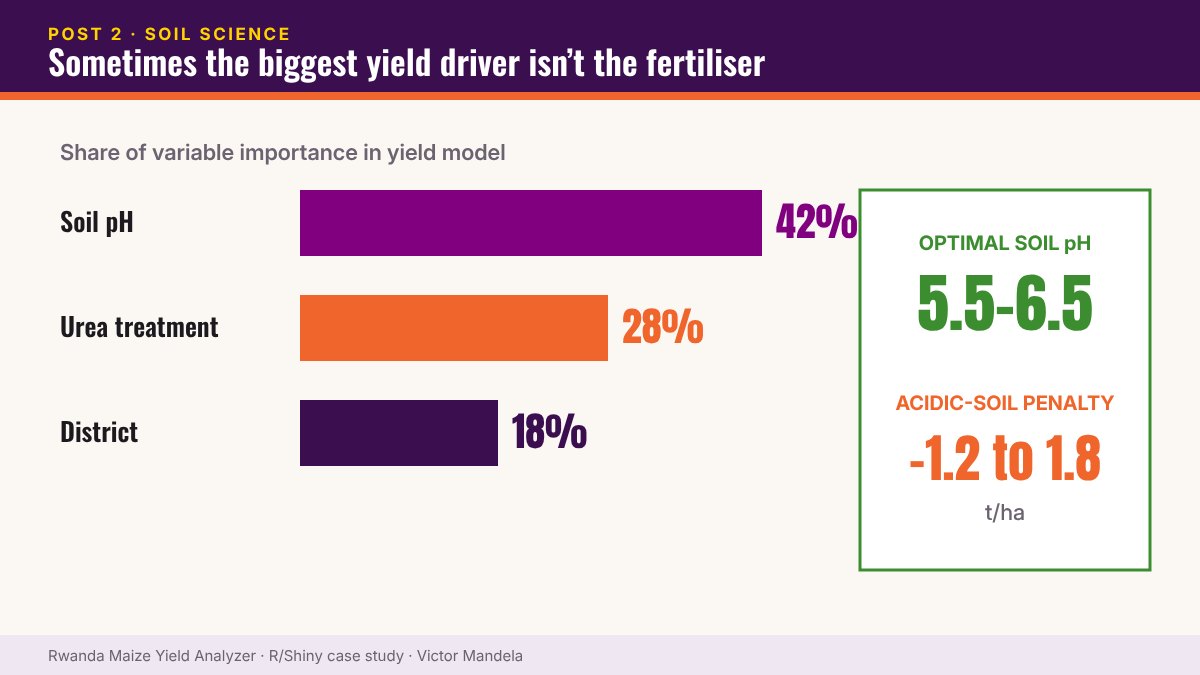
One result stood out
| Driver | Share of variable importance |
|---|---|
| Soil pH | ~42% |
| Urea treatment | 28% |
| District | 18% |
The analysis also identified an optimal soil pH range of about 5.5–6.5 — and acidic soils were associated with yield reductions of around 1.2–1.8 t/ha.
Why it matters in the field
On strongly acidic soils, fine-tuning the urea schedule means optimising the second lever while the biggest one is left alone.
Good agricultural data science connects the intervention to the environment that intervention operates in.
▶ Try it yourself — live R Shiny demo. Open the Rwanda Maize Yield Analyzer · Username: test · Password: test
Part 2 of 10 — The Maize Yield Case Study. Read the full case study and launch the dashboard › · Work with me on a similar project ›